
Owning a property is a massive investment, and the reality is that the exterior requires just as much attention as the interior to maintain its value, functionality, and curb appeal. For many homeowners and property managers, the focus naturally drifts indoors—to kitchen remodels, HVAC upgrades, or fresh coats of paint. However, your property’s exterior is its first line of defense against the elements. When exterior maintenance is deferred, what starts as a minor oversight can quickly escalate into compounding, expensive issues.
Neglecting the outdoors can lead to cascading failures. A poorly draining yard can compromise your foundation. Overgrown vegetation can damage your roof shingles or siding. Inefficient watering habits can result in skyrocketing utility bills and a landscape that struggles to survive the changing seasons. The truth is, a proactive approach to your exterior spaces is always more cost-effective than reactive damage control.
This guide is designed to walk you through a comprehensive, preventative approach to exterior property management. By understanding the core tenets of outdoor maintenance, you can save yourself significant time, money, and stress in the long run. A well-maintained exterior is not merely about preserving aesthetics; it is fundamentally about risk mitigation, resource efficiency, and protecting the structural integrity of your entire property. Let’s break down the essential strategies you need to implement to keep your property safe, sustainable, and visually stunning year-round.
Evaluate Your Canopy Health Annually to Prevent Property Damage
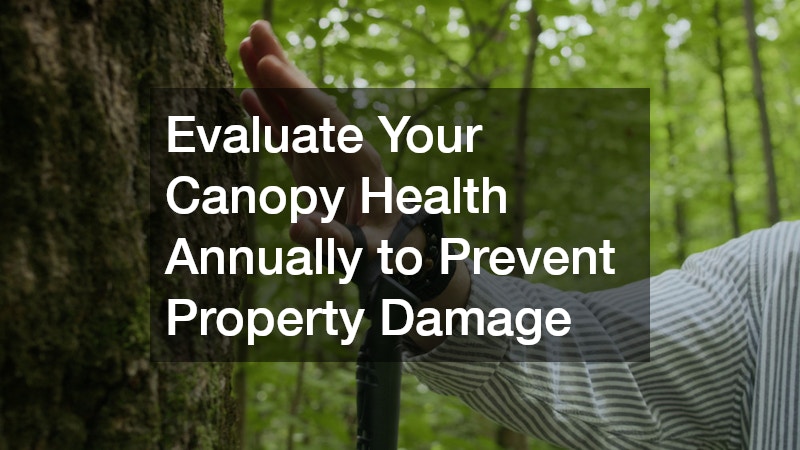
Large vegetation on your property provides vital shade, improves air quality, and significantly boosts property value. However, these massive structures of wood and foliage require ongoing monitoring. Evaluating canopy health is a critical annual task that can prevent catastrophic damage before the high winds of storm season arrive. Learning to spot the early signs of disease, structural weakness, or overgrowth is your best defense against unexpected property damage.
To effectively monitor your canopy, you need to know what to look for at the ground level, along the trunk, and up in the branches.
-
Inspect the Root Collar: The area where the trunk meets the soil should flare out slightly. If you see fungal growth (like mushrooms) around the base, or if the soil looks continually waterlogged, root rot may be setting in.
-
Examine the Bark: Look for deep, vertical cracks, peeling bark that doesn’t naturally shed, or sap oozing from holes. These are often signs of boring insects or internal decay.
-
Monitor the Leaves: Dead branches that lack foliage during the spring and summer are a major red flag. Similarly, leaves that change color prematurely or drop out of season indicate underlying stress.
While identifying these issues is a task any property owner can start, addressing them is a different story. DIY pruning on massive oaks, pines, or maples is inherently dangerous. Climbing with chainsaws, judging the tension of heavy limbs, and predicting drop zones are not tasks for the weekend warrior. It is highly recommended to consult a certified tree care company to assess the structural integrity and canopy balance of your largest plants. These professionals have the trained eye required to spot internal decay that might not be obvious to a layman.
Furthermore, routine maintenance is about more than just clearing branches away from your roofline. Professional tree trimming services promote directed, healthy growth. By carefully thinning the crown, professionals allow wind to pass smoothly through the canopy rather than acting like a sail, which vastly reduces the risk of the trunk snapping during a severe storm. This targeted pruning also increases sunlight penetration to the lawn below, improving the overall health of your entire yard.
Safely Eliminate Dead or Decaying Trunks Before Storm Season Hits
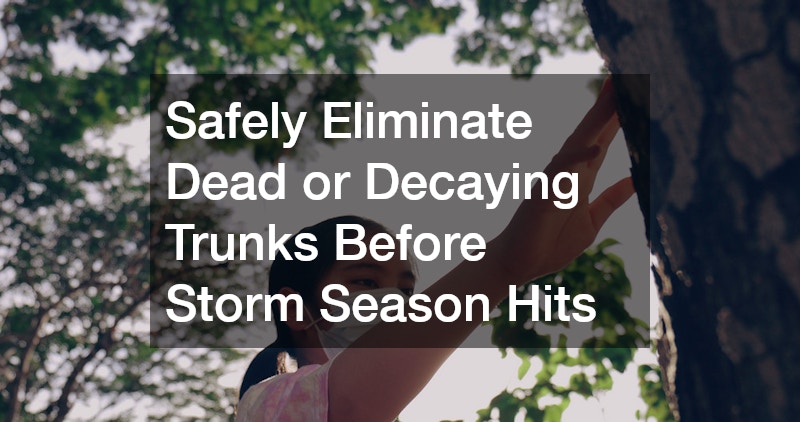
Even with the most meticulous care, there comes a time when large vegetation reaches the end of its life cycle or sustains fatal damage from disease or extreme weather. When mitigation fails, your focus must shift immediately to risk management and property liability. Leaving a dead or dying trunk standing on your property is a significant hazard.
Recognizing the point of no return is crucial. A specimen can generally no longer be saved if the trunk is hollowed out by decay, if root rot has destabilized its anchor to the ground, or if it has developed a severe, sudden lean toward a home, driveway, or power line. In these instances, extraction is the only viable option to protect your physical assets and ensure the safety of your family or tenants.
The logistics of extracting massive vegetation in tight residential or commercial spaces are incredibly complex. You are dealing with thousands of pounds of wood suspended in the air, often positioned directly over delicate infrastructure.
-
Rigging and Craning: Professionals often have to use complex rigging systems or cranes to dismantle the structure piece by piece, lowering heavy sections safely to the ground to avoid damaging fences, landscaping, or roofs.
-
Stump Grinding: Extraction doesn’t end when the trunk is down. The remaining stump must be ground below the surface to prevent hazardous tripping points, stop invasive roots from continuing to grow, and prevent the decaying wood from attracting termites.
-
Debris Management: The sheer volume of wood chips, branches, and logs generated by this process is staggering and requires heavy-duty hauling to clear the site completely.
Because of these complexities, professional tree removals are absolutely essential. Attempting this without the proper heavy machinery and safety protocols can lead to catastrophic property damage or fatal injuries.
When it comes time to clear the hazard, vetting the right professionals is your most important step. Do not simply hire the first crew with a chainsaw. Take the time to verify that the contractors carry robust liability insurance and workers’ compensation. When comparing various tree removal companies, ask for proof of bonding and inquire about the specific equipment they plan to use on your property. Ensuring they follow industry safety standards guarantees that you are fully protected from liability during the extraction process.
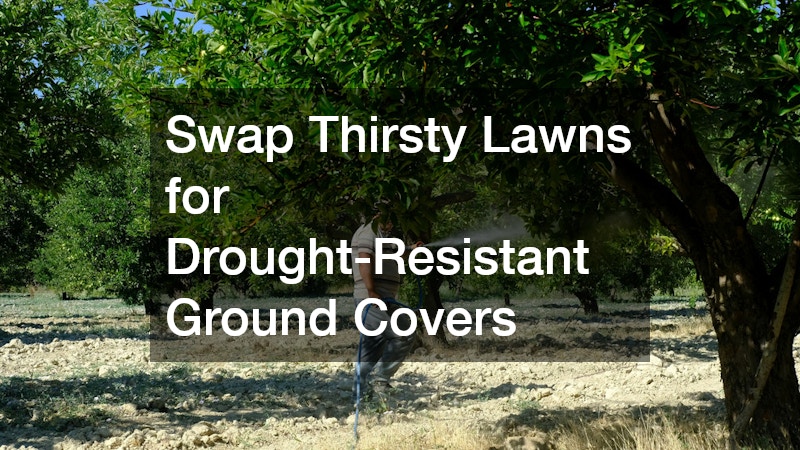
Swap Thirsty Lawns for Drought-Resistant Ground Covers
One of the most resource-intensive aspects of managing a property is maintaining a traditional green lawn. Between the endless cycle of watering, mowing, aerating, and fertilizing, a standard yard demands a massive amount of time and money. By rethinking your approach to ground cover, you can drastically reduce your utility bills, eliminate weekend lawn labor, and create a sustainable environment that looks pristine year-round.
The first step is evaluating the immense water requirements of your current landscape. In many regions, especially those prone to seasonal droughts or strict water restrictions, keeping a non-native grass species alive is a losing battle. The chemical fertilizers required to force growth also inevitably run off into local water systems, creating environmental hazards.
To break this cycle, consider implementing evergreen alternatives and texturizing your space with hardscaping.
-
Modern Artificial Turf: For areas where you still want the look and feel of a lush green lawn—such as play areas for children or pets—modern alternatives offer an incredible return on investment. High-quality synthetic grass installations look incredibly realistic today, lacking the shiny, plastic appearance of older artificial turfs. They are engineered with advanced drainage backings to prevent puddling and completely eliminate the need for mowing, weeding, and watering.
-
Permeable Pathways: Break up large expanses of land with permeable hardscaping. Creating pathways out of decomposed granite, flagstone, or gravel reduces the footprint of areas that need active maintenance while allowing rainwater to naturally seep back into the aquifer rather than running off into the street.
-
Decorative Dry Creek Beds: These are excellent for managing drainage while adding visual interest. They naturally guide heavy rainwater away from your foundation and prevent soil erosion.
To successfully implement these hardscaping elements, you will need the right materials in large quantities. Trying to buy bags of gravel one by one from a hardware store is wildly inefficient and expensive. Instead, scheduling a bulk rock delivery directly to your property allows you to tackle large-scale projects like laying a gravel driveway, building retaining wall backfill, or creating zero-maintenance focal points all at once. This approach dramatically cuts down on the cost of materials and gives your property a clean, modern aesthetic that requires virtually zero upkeep.
Select Climate-Appropriate Vegetation to Reduce Maintenance Costs
If you want to achieve a thriving, vibrant landscape without being a slave to watering hoses and soil amendments, you must work with your local climate rather than fighting against it. Educating yourself on the principles of xeriscaping—a landscaping philosophy that reduces or eliminates the need for supplemental water from irrigation—is one of the most effective ways to lower your outdoor maintenance costs over the lifetime of your property.
The power of utilizing endemic flora cannot be overstated. Plants that are native to your specific region have spent thousands of years adapting to your area’s exact rainfall patterns, soil composition, and seasonal temperature swings. Because of this, they require drastically less water, rarely need chemical fertilizers to thrive, and naturally possess a higher resistance to local diseases and pests.
When you decide to transition to a more climate-appropriate landscape, sourcing the right materials is crucial.
-
Avoid Big-Box Stores: National chain hardware stores often stock plants that look beautiful in a greenhouse but are fundamentally unsuited for your specific USDA hardiness zone. These plants often suffer from transplant shock and require intense life support to survive their first year.
-
Consult Regional Experts: Instead, build a relationship with a local plant nursery. The horticulturists on staff can provide expert, micro-climate-specific advice. They cultivate flora that is already acclimated to your environment, ensuring healthier root stocks and a much higher survival rate once planted in your yard.
-
Group by Hydrozone: When designing your new layout, group plants together based on their water needs. Placing thirsty plants next to drought-tolerant ones leads to either overwatering the hardy plants or dehydrating the fragile ones.
For property owners managing expansive residential lots or massive business fronts, redesigning an entire landscape can be a daunting, labor-intensive task. In these scenarios, it is highly recommended to consult with commercial landscapers. These professionals specialize in scaling up sustainable designs. They have the architectural knowledge to map out large-scale, low-maintenance green spaces that project a polished, professional image year-round. They understand how to balance hardscaping, native shrubs, and appropriate ground covers so that the final product looks intentional and lush, rather than barren, without requiring daily hands-on upkeep.
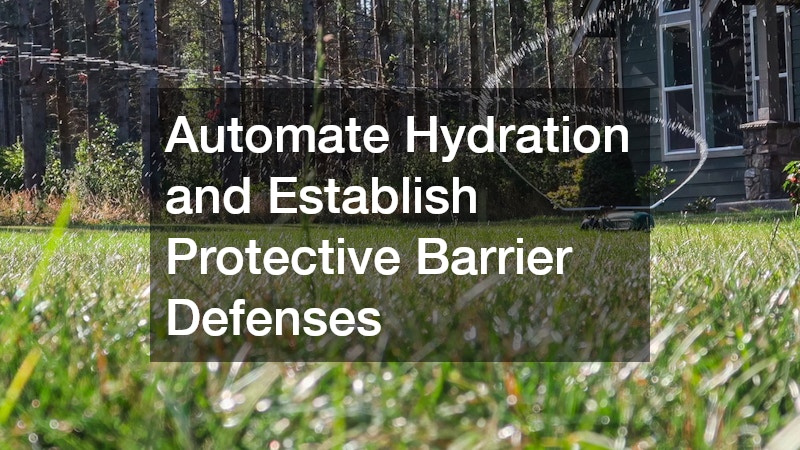
Automate Hydration and Establish Protective Barrier Defenses
Once you have optimized your landscape’s design and cleared away potential hazards, the final step in an essential maintenance plan is protecting your investment. This involves taking the human error out of hydration and proactively defending your property line against invasive threats. By leveraging smart technology and establishing preventative perimeter treatments, you can ensure your exterior remains resilient with minimal daily effort.
The transition from manual watering to smart, automated systems is one of the easiest ways to improve the health of your soil and lower your water bill. Hand watering is wildly inconsistent; it often leads to shallow root systems that are highly susceptible to drought.
-
Drip Irrigation for Beds: For your garden beds and shrubs, drip lines deliver water directly to the base of the plant. This reduces evaporation, prevents water from sitting on leaves (which can cause fungal diseases), and starves weeds of the surface moisture they need to sprout.
-
Smart Controllers: Modern systems can connect to your home’s Wi-Fi and pull local weather data. If rain is in the forecast, the system will automatically delay the watering cycle, saving you from paying to water your lawn during a downpour.
To achieve this level of efficiency, a professional sprinkler installation is highly recommended. Technicians can map out the precise water pressure needed for different zones of your yard, ensuring that delicate flower beds aren’t blasted with high-pressure sprays while deep-rooted shrubs get the slow soaking they require.
Beyond hydration, identifying and repelling intruders is the other half of property defense. You must know how to spot the early signs of damage from pests. Yellowing patches in your lawn could be a sign of grubs eating the roots from below. Unexplained sawdust near your wood siding or decking could indicate carpenter ants or termites. Sticky residue on your plant leaves often points to an aphid infestation.
Waiting until you see a swarm of insects to take action is a reactive mistake. By the time the pests are highly visible, the damage to your root systems or home exterior is usually well underway. Emphasize the necessity of preventative treatments. By scheduling routine outdoor pest control services, you establish an invisible barrier around your property line. This proactive approach safely protects your flora from destructive insects while simultaneously defending your home’s foundation from encroaching ants, spiders, and wood-destroying organisms.
Conclusion
Maintaining the exterior of your property does not have to be an overwhelming burden. By shifting your mindset from reactive repairs to proactive management, you can protect your investment and drastically reduce your long-term costs. The key is to assess your risks early, adapt your landscape to work with your local climate, and leverage automation to handle the daily upkeep.
To make this process manageable, the best action you can take today is to create a seasonal maintenance calendar. Do not try to tackle every exterior project in a single weekend. Schedule your canopy assessments and heavy pruning for the late winter when branches are bare. Plan your new planting and hardscaping projects for the mild days of spring or early fall. Set reminders to winterize your irrigation systems before the first hard freeze, and book your preventative perimeter treatments before the intense heat of summer drives insects toward your home.
Investing time and resources into the exterior of your property today pays massive dividends tomorrow. You are not just buying curb appeal; you are ensuring the safety of your structures, the efficiency of your utility usage, and the overall longevity of your property. Walk outside this weekend, take a critical look at your property line, and start tackling your exterior to-do list. Your future self—and your property value—will thank you.