
Your roof is your property’s primary line of defense against the elements. It shields your family, your employees, your assets, and the structural integrity of the building itself from relentless sun, torrential rain, heavy snow, and high winds. When a roof begins to fail, the consequences are rarely isolated; a small, unnoticed leak can quickly escalate into devastating water damage, toxic mold growth, ruined insulation, and compromised electrical systems. Because the stakes are so incredibly high, repairing or replacing a roof is one of the most significant financial investments a property owner will ever make.
Despite the critical nature of this work, the construction market is often saturated with unqualified builders, transient storm chasers, and high-pressure salespeople. This saturation makes the hiring process incredibly stressful. Property owners often find themselves overwhelmed by conflicting advice, vastly different price estimates, and technical jargon they do not fully understand. Choosing the wrong person for the job can lead to shoddy workmanship, voided manufacturer warranties, and thousands of dollars in premature replacement costs.
To protect your investment, you must approach the hiring process not as a simple transaction, but as a rigorous interview for a crucial partnership. You are essentially hiring a specialized project manager and a team of technicians to execute a complex engineering task on your property. This comprehensive guide will equip you with a step-by-step framework to screen, interview, and confidently hire the best professionals for your specific needs. By moving past surface-level promises and digging deeply into credentials, you can navigate the market with confidence and secure a builder who values craftsmanship, safety, and long-term durability.
Start with Proven Community Vetting
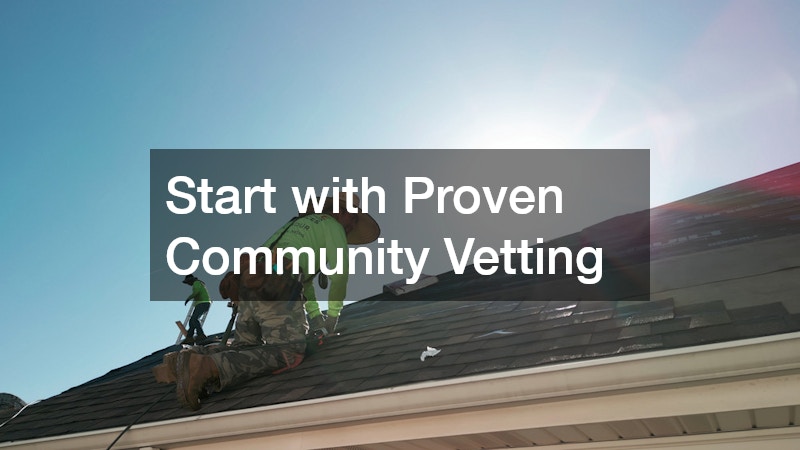
The initial search for a reliable builder often starts with word-of-mouth recommendations and online searches. However, taking these initial impressions at face value is a dangerous game. A truly rigorous vetting process requires you to dig beneath the surface of slick marketing campaigns and verify the hard facts of a builder’s operational history, legal standing, and community reputation.
Cross-Reference Neighborly Advice with Official State Licensing
When a neighbor recommends a builder, your very next step should be to independently verify that business’s legal standing. Do not take a printed license number on a glossy brochure as absolute proof. The regulations governing construction vary wildly from state to state, and even from municipality to municipality.
-
Understand the Difference Between Licensing and Registration: In many jurisdictions, simply being “registered” means a business has paid a tax fee to operate. A “license,” however, usually indicates that the builder has passed rigorous trade exams, demonstrated financial solvency, and proven their knowledge of local building codes.
-
Use Government Databases: Navigate to your state’s Department of Labor, licensing board, or equivalent regulatory agency website. Input the name of the prospective roofing contractors to ensure their license is active, in good standing, and specifically covers the type of work you need.
-
Check for Disciplinary Actions: These state databases will often list past infractions, suspended licenses, or formal complaints filed against the business. A clean record with the state board is a non-negotiable baseline for moving forward.
Dig Beyond 5-Star Reviews to Spot Fake Testimonials
In the digital age, online reviews are easily manipulated. A perfect five-star rating across the board can sometimes be as suspicious as a string of one-star complaints. You must learn to read between the lines to gauge the true consistency and reliability of a business.
-
Look for Nuance in Feedback: Authentic reviews often contain specific details about the project, the crew’s punctuality, the cleanliness of the job site, and how unexpected problems were handled. Generic reviews that simply say “Great job, highly recommend” carry very little weight.
-
Evaluate the Response to Negative Reviews: How a business handles criticism is incredibly telling. Do they respond aggressively, or do they acknowledge the issue and offer a professional resolution?
-
Request Local References: Ask the local roofers you are interviewing for a list of past clients specifically within your neighborhood or zip code. Drive by these properties to observe how the work has held up over time, and if possible, speak to the homeowners about their firsthand experience with the crew’s daily operations.
Verify Insurance Credentials Directly with the Carrier
Hiring an uninsured or underinsured crew places a massive, unacceptable liability squarely on your shoulders. If a worker falls off a ladder on your property, or if a misplaced tarp leads to thousands of dollars in water damage to your interior, you could be held financially responsible if the builder’s insurance is inadequate or lapsed.
-
Demand a Certificate of Insurance (COI): This document proves that the business carries both General Liability insurance (to cover property damage) and Workers’ Compensation insurance (to cover employee injuries).
-
Verify the Policy Directly: Do not just look at the piece of paper. Call the insurance agency listed on the COI directly. Provide them with the policy number and confirm that the coverage is currently active and has limits high enough to cover the total replacement cost of your property in a worst-case scenario.
Match the Business Size and Focus to Your Property

A common mistake property owners make is assuming that a roof is just a roof. In reality, the architectural style, the slope, the underlying structure, and the zoning of the building dictate entirely different construction approaches. Hiring a builder whose operational scale and primary expertise do not perfectly align with your specific property type is a recipe for disaster.
Determine the Building Code Requirements for Your Specific Property Type
The regulatory environment for a single-family home is vastly different from that of a retail center or an industrial warehouse. A builder must possess an intimate understanding of the codes that govern your specific structure to ensure the final product passes municipal inspections.
-
Understand Zoning and HOA Regulations: If you live in a residential neighborhood, your project may be subject to strict Homeowner Association guidelines regarding material types, colors, and permissible working hours. The residential roofing company you select must have a proven track record of successfully navigating these specific bureaucratic hurdles without causing delays.
-
Navigate Fire and Safety Codes: Larger facilities are bound by stringent fire codes, energy efficiency mandates, and structural load requirements, particularly if the building houses heavy HVAC units or solar arrays. Ensuring compliance requires a deep understanding of structural engineering principles.
Assess the Contractor’s Portfolio for Similar Architectural Styles
Experience is not highly transferable between wildly different architectural designs. A team that excels at installing standard three-tab asphalt shingles on simple, single-story ranch homes might completely bungle the installation of architectural slate on a complex, steep-sloped Victorian property with multiple dormers and valleys.
-
Request Relevant Case Studies: Ask to see a portfolio of completed projects that closely mirror your own building’s design, pitch, and complexity.
-
Evaluate Complex Details: Look closely at the photos of their past work. Pay attention to how they handle tricky intersections, chimney surrounds, and skylights. These vulnerable areas are where inexperienced crews make the most critical errors.
-
Discuss Specialized Techniques: If your property features unique architectural elements like parapet walls, mansards, or built-in box gutters, explicitly ask the builder to detail their specific approach to waterproofing these challenging features.
Ensure the Crew Has the Right Equipment Scale for the Job
The logistics of a construction project scale exponentially with the size of the building. A sprawling facility requires a level of manpower, heavy machinery, and logistical coordination that a small mom-and-pop operation simply cannot support safely or efficiently.
-
Assess Material Handling Capabilities: Large-scale projects often require massive cranes to safely hoist heavy pallets of materials directly to the rooftop. Only established commercial roofing companies generally have the necessary capital, safety training, and liability coverage to operate and manage this heavy machinery in crowded environments.
-
Evaluate Waste Management Logistics: Tearing off thousands of square feet of old material generates a staggering amount of debris. The builder must have a concrete plan for securing multiple heavy-duty roll-off dumpsters and ensuring they are swapped out promptly so the job site does not become a dangerous hazard.
-
Inquire About Crew Size and Management: Massive projects require dedicated, on-site project managers who do not swing hammers but strictly oversee safety protocols, quality control, and the coordination of multiple large crews working simultaneously.
Demand Proof of Material-Specific Competency
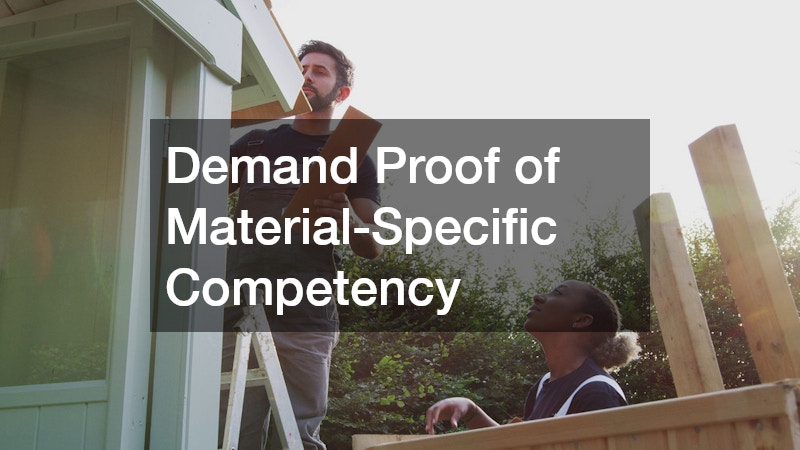
The materials used to protect a building have evolved dramatically over the last few decades. Today, property owners have access to a wide array of advanced synthetic underlayments, energy-efficient membranes, and highly durable metals. However, the performance of these premium materials is entirely dependent on the flawless execution of their unique installation requirements.
Ask for Manufacturer Certifications Before Approving Specialized Materials
High-end manufacturers (like GAF, Owens Corning, or Carlisle) offer exclusive certification programs to builders. These certifications are not merely marketing fluff; they require the crews to undergo rigorous, ongoing factory training to learn the exact, proprietary methods for installing that manufacturer’s specific product line.
-
Understand the Risks of Improper Installation: Every material behaves differently under thermal stress. For instance, steel and copper panels expand and contract significantly with temperature changes. If the specialized metal roofers you hire fail to use the correct sliding clips or specific fasteners, the panels will warp, the fastener holes will stretch, and the entire system will inevitably leak.
-
Verify Factory Credentials: Always ask the builder to provide proof of their current manufacturer certification for the exact brand and line of material they are proposing to install. You can usually verify this directly on the manufacturer’s website.
-
Protect Your Investment: Many manufacturers explicitly state in their fine print that their product warranty is completely voided if the material is not installed by a certified professional using their exact, approved methodology.
Inspect Past Installations for Proper Flashing and Ventilation Techniques
Even the most expensive, top-tier materials will fail prematurely if the underlying ventilation system is inadequate or if the flashing around the vulnerable intersections is poorly fabricated. These are the hidden details that separate true craftsmen from amateurs.
-
Focus on Airflow Dynamics: A poorly ventilated attic traps intense heat and moisture. This bakes the materials from the inside out, drastically reducing their lifespan, and encourages dangerous mold growth in the insulation. Ensure the builder calculates the precise ratio of intake vents (soffits) to exhaust vents (ridges or gables) required for your specific square footage.
-
Examine Flashing Protocols: Flashing is the custom-bent metal used to waterproof transitions—like where the slope meets a vertical wall, or around a chimney. Ask the builder to explain their process for installing step flashing and counter-flashing. Relying heavily on tar or caulking instead of proper metal fabrication is a massive red flag.
Request Warranty Breakdowns for Both Labor and Unique Materials
Warranties in the construction industry are notoriously complex and riddled with loopholes. You must carefully distinguish between the warranty provided by the manufacturer for the physical materials and the warranty provided by the builder for the actual labor and craftsmanship.
-
Analyze the Material Warranty: Does it cover the cost of tear-off and disposal if the material proves defective, or just the cost of the replacement material itself? Is the warranty prorated, meaning its value decreases over time?
-
Scrutinize the Workmanship Guarantee: How long does the builder guarantee their labor? A standard labor warranty is typically one to five years, but highly reputable companies may offer ten to twenty years.
-
Understand Complex Membrane Systems: Materials used in commercial flat roofing, such as TPO (Thermoplastic Polyolefin) or EPDM (Ethylene Propylene Diene Monomer), require specialized, heat-welded seams. The warranties for these complex membrane systems are highly contingent on strictly followed chemical preparation and precise welding temperatures. Read the fine print thoroughly.
Plan for Long-Term Maintenance and Emergency Needs
A completed installation is not the end of your relationship with your builder; it is merely the beginning of the maintenance lifecycle. Exposure to UV radiation, thermal shock, high winds, and organic debris will constantly degrade the structure over time. Proactive planning for ongoing maintenance and emergency situations is essential to maximize the lifespan of your investment.
Establish a Preventive Maintenance Schedule in the Initial Contract
Do not wait until a leak damages your drywall or ruins inventory to think about maintenance. The most cost-effective way to manage a property is to catch minor, inexpensive issues before they compound into catastrophic structural failures.
-
Demand Routine Inspections: A comprehensive commercial roofing service agreement should outline biannual inspections (typically in the spring and fall) to check for deteriorating sealants, backed-up drains, loose fasteners, and impact damage from recent storms.
-
Include Debris Removal: Accumulating leaves, branches, and dirt trap moisture against the surface and clog critical drainage systems. Regular debris removal must be a specified line item in your maintenance plan to prevent pooling water.
-
Track the Asset’s Health: A professional crew will provide detailed, photographic reports after every inspection, noting areas of minor wear and tear, and creating a historical timeline of the structure’s health so you can budget for future repairs accurately.
Clarify the After-Hours Protocol for Urgent Leaks and Storm Damage
When a severe weather event strikes—such as a localized hail storm, a microburst, or a fallen tree—water infiltration can cause thousands of dollars of interior damage in a matter of hours. You need to know exactly who to call and how quickly they will respond.
-
Establish Emergency Response Times: Ask prospective builders about their specific protocols for emergency dispatch. Do they guarantee a response within 24 hours? Do they have a dedicated emergency hotline that is manned after hours and on weekends?
-
Differentiate Between Tarping and Repairing: In the immediate aftermath of a severe storm, the first priority is stabilization. Ensure you know the crew’s capacity to safely deploy emergency tarping or shrink-wrap solutions to stop the bleeding before they schedule the permanent local roof repairs.
-
Assess Their Storm Damage Expertise: Find out if the company has dedicated staff experienced in helping clients navigate complex insurance claims, document damage comprehensively, and meet with insurance adjusters on-site to advocate for proper coverage.
Negotiate Service Level Agreements for Ongoing Upkeep
For complex facilities or properties managed by a board, informal handshakes are insufficient. You need a legally binding Service Level Agreement (SLA) that clearly dictates the expectations, responsibilities, and response metrics for the ongoing upkeep of the property.
-
Define Scope of Work: The SLA must clearly define what constitutes routine maintenance versus what is billed as an additional repair. It should outline exactly what parts of the drainage system, parapet walls, and equipment curbs are included in the periodic checks.
-
Establish Key Performance Indicators (KPIs): Set measurable standards for the builder’s performance, such as guaranteed response times for non-emergency service calls, and specific timelines for providing written estimates after an inspection identifies a problem.
-
Lock In Favorable Rates: A well-structured SLA will often lock in favorable hourly labor rates or provide discounts on materials for any future repair work, saving you substantial money over the lifespan of the structure.
Master the Estimate and Contract Phase

The final hurdle in securing a reliable professional is navigating the financial and legal documentation. The estimate and the contract are the blueprints for your entire working relationship. Accepting a vague, poorly written proposal leaves you vulnerable to massive cost overruns, hidden fees, and legal disputes. Absolute transparency in the paperwork is a hallmark of a trustworthy business.
Demand Line-Item Breakdowns for Tear-Off, Disposal, and Labor
An estimate that simply provides a single, lump-sum total at the bottom of the page is unacceptable. You have the right to know exactly where every single dollar of your investment is going. A professional estimate should be a highly detailed, multipage document.
-
Break Down Material Costs: The estimate must list the exact brand, product line, color, and quantity of every major component, including the underlayment, the primary surface material, the ridge caps, and the ventilation units.
-
Detail Labor and Ancillary Fees: A reputable residential roofing company will separate the cost of the raw materials from the hourly cost of the labor. Furthermore, the estimate should explicitly list the costs associated with pulling necessary municipal permits, renting specialized equipment, and the heavy fees associated with waste disposal at local landfills.
-
Define the Process for Hidden Damage: It is impossible to know the exact condition of the underlying wooden decking until the old materials are torn off. The contract must clearly state the per-sheet cost of replacing rotten plywood so you are not blindsided by arbitrary upcharges if hidden structural damage is discovered.
Set Strict Cleanup Protocols and Property Protection Clauses
The tear-off phase of construction is inherently violent, messy, and dangerous. Thousands of pounds of old material, sharp metal edges, and rusty nails will be raining down from above. Your contract must include strict provisions detailing exactly how the crew will protect the rest of your property.
-
Protect Landscaping and Hardscaping: The contract should state that the crew will use heavy-duty tarps to protect delicate flower beds, valuable shrubs, and air conditioning units. It should also outline how they will protect your driveway from being cracked by the immense weight of the delivery trucks and roll-off dumpsters.
-
Mandate Daily Debris Sweeps: A safe job site is a clean job site. Ensure the agreement requires the crew to tidy the area at the end of each workday, rather than letting dangerous debris pile up until the end of the week.
-
Require Magnetic Nail Sweeps: Stray nails are a severe hazard to vehicle tires, children, and pets. A non-negotiable clause in your contract must dictate that the crew will perform exhaustive sweeps of the entire perimeter using powerful rolling magnets upon the completion of the project.
Avoid Upfront Payment Scams by Structuring Milestone-Based Payments
How a business structures its payment schedule tells you everything you need to know about its financial stability and operational ethics. If a builder demands the entire payment, or a massively disproportionate deposit, before a single tool is lifted, walk away immediately.
-
Understand Standard Deposit Structures: It is standard practice to ask for a reasonable initial deposit to cover the upfront cost of ordering custom materials and securing a spot on the production schedule. However, this deposit should rarely exceed 20% to 30% of the total project cost.
-
Tie Payments to Verifiable Progress: Structure the remainder of the contract to release funds only when specific, verifiable milestones are achieved. For example, a second payment could be released after the complete tear-off and successful inspection of the underlying wooden decking.
-
Hold Back the Final Retainage: An established commercial roofer or high-end residential builder will be perfectly comfortable with you withholding the final 10% to 15% of the total cost until the project is 100% complete, the site is meticulously cleaned, all municipal inspections have been passed, and all final warranty paperwork has been signed and delivered into your hands.
Conclusion
Securing a high-quality, durable installation requires far more than blindly accepting the lowest bid or the fastest timeline. It demands a commitment to extreme diligence, meticulous vetting, and a willingness to ask hard, detailed questions of every professional you interview. By moving methodically through the processes of verifying legal credentials, aligning expertise with your specific architectural needs, demanding proof of specialized training, and insisting on airtight, transparent contracts, you mitigate the massive risks inherent in large-scale property improvements.
Remember that throughout this process, you are the project manager and the final decision-maker. You have the absolute right to demand clear communication, inspect insurance certificates directly from the carrier, and reject vague estimates that leave you legally and financially vulnerable. A trustworthy builder will welcome your scrutiny, viewing your thoroughness not as an annoyance, but as the foundation of a respectful, professional partnership.
Take the time to build your interview checklist today. Armed with the right knowledge and a methodical approach, you can cut through the noise of the market, protect your property from the elements, and secure a lasting investment that will provide safety and peace of mind for decades to come.